Visitor visa · Subclass 600
Visitor visa (subclass 600)
The 600 covers tourists, family visits and short business visits — six streams under one subclass, all answering the same question: will you visit, and then go home? No stream lets you work in Australia. General information — eligibility depends on your circumstances.
MARN 0742343 · Registered Migration Agent · Perth & Manila
- Tourist
- Visit family & friends, from in or outside Australia
- Sponsored Family
- Family in Australia sponsors you
- Business Visitor
- Business reasons — never work
- ADS & Frequent Traveller
- The two specialist streams
Start with your visit
Family visit, sponsored family, or business.
The stream mostly answers one question: what is the honest reason for the trip? If one of these sounds like you, a consultation is the cheapest way to find out where you stand.

You’re visiting family or friends in Australia
The tourist stream, applied for outside Australia: a holiday, a cruise, or time with the people you came to see. A stay of three months is typical; up to twelve in certain circumstances — and you apply and receive the decision while you’re still outside Australia.

Family in Australia is sponsoring your visit
The sponsored family stream: an eligible family member who is an Australian citizen or permanent resident sponsors you, and the Department may ask the sponsor for a security bond. Worth understanding before anyone commits to it.

You’re travelling for business — meetings, not a job
The business visitor stream covers a short visit for business visitor reasons — up to three months — but you can’t work in Australia or sell goods or services. If the real plan is to work, that’s a different visa conversation, and we’ll tell you so.
How a visitor application actually runs
Six steps — and the case is made before anything is lodged
You prove the visit is genuine; we prepare and lodge; the Department decides the grant and the stay period. Knowing where your part ends — and where the Department’s begins — is the most useful thing we can tell you up front.

Which stream fits the real purpose of the trip, and whether the genuine-visitor test is one your circumstances can meet — said plainly at this stage rather than after you’ve spent money. If we don’t think we can help, we say so.
FocusThe Department can decide without asking you for anything more, so the first application has to be the complete one. We map your evidence — funds for the stay, an invitation letter if you’re visiting family, and the reasons you’ll return home: work, study, family, assets.
You, with FocusEach traveller lodges their own application — visitor visas can’t include family members. Where you engage us, we prepare and lodge through ImmiAccount, with the risks in your case set out in writing before anything goes in.
FocusThe Department of Home Affairs decides whether to grant, and sets the stay period case by case — it might not grant the length of stay you ask for. No registered agent, us included, can promise either. What we can do is make sure the application in front of the Department is the clearest your circumstances support.
The Department assesses the application and may ask for biometrics, health examinations or further information. We manage that correspondence with you and tell you what each request actually means.
Home AffairsThe decision arrives in writing: your stay period, single or multiple entry, and your conditions. Read it before you book anything — the Department’s own instruction is not to arrange travel until the grant arrives. If the answer is no, the letter says why, and whether a review right exists.
Home AffairsObey the conditions and the stay period: no work, study only up to three months, and leave before your stay ends. A visitor visa can’t be extended — if life points at a longer stay, talk to us about a different visa well before the clock runs out.
YouApplying from the Philippines
One application, prepared on both sides of the flight
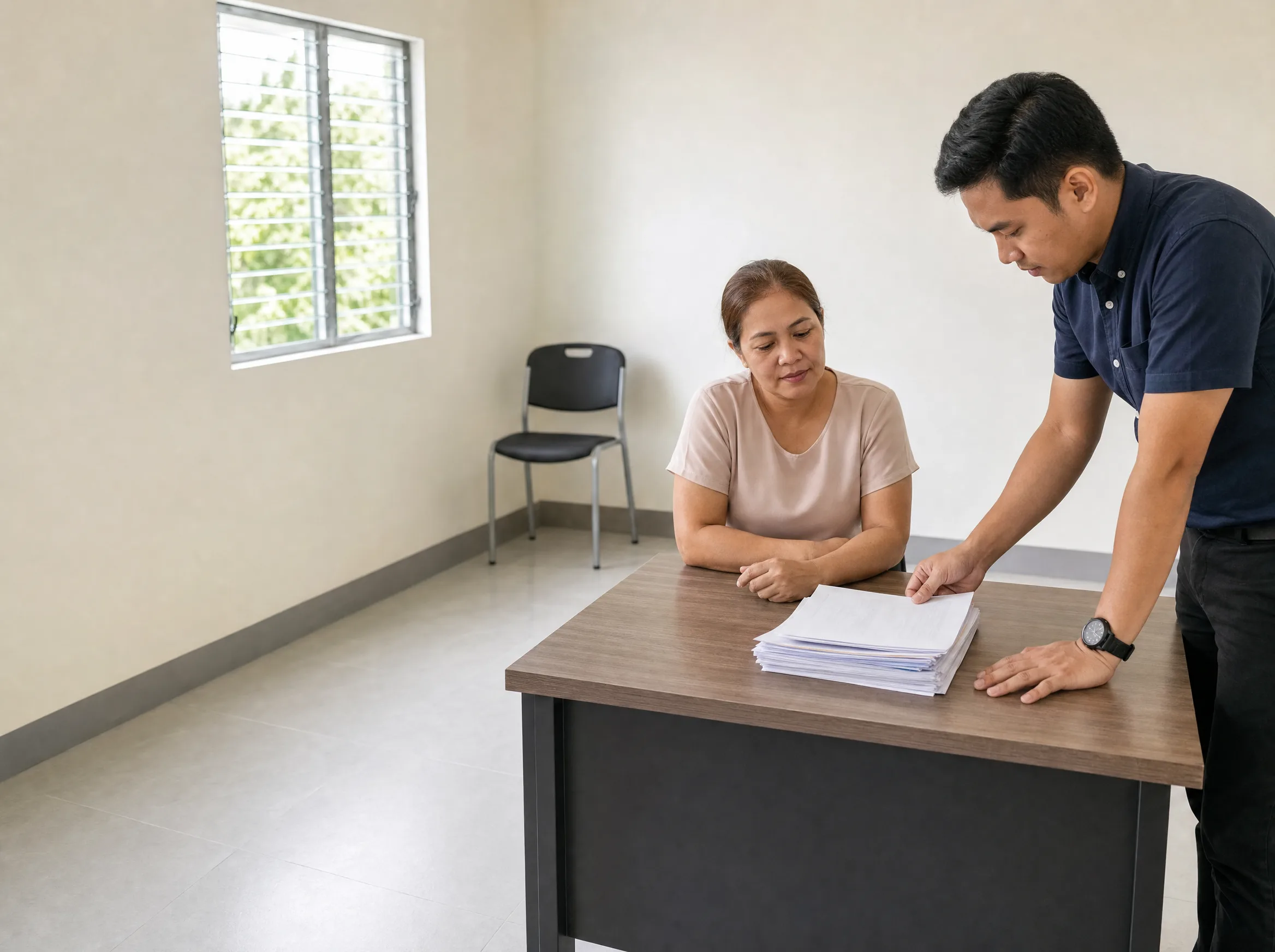
Most visitor applicants we help live in the Philippines and are visiting family in Australia. The practice sits in both places, so the evidence of a genuine visit is gathered where that evidence actually lives.
Uniplan satellite office for visit evidence.
302 J.P. Rizal St., Project 4, Quezon City, Metro Manila 1109, Philippines — Appointment only. All enquiries go to the Perth Team.
Evidence from the Philippines first.
The genuine-visitor evidence is Philippine-side: funds, employment, family ties, property — the reasons you’ll return. It can be gathered face to face in Manila instead of over email, and put in front of the Department complete the first time.
Visitor visa applications made outside Australia
You apply, and receive the decision, while you’re outside Australia — so the Philippine evidence and the Australian family’s side of the story are coordinated in one file, by one practice, in both countries.
Common questions
The questions applicants ask us first
General information about the visitor pathway and how we work — not migration advice.
This page is a starting point, not an assessment. It isn’t an eligibility checker, and nothing on it means you qualify — that call is made on your documents, in a consultation.
Six streams sit under the one subclass — the honest purpose of the trip picks the stream.
- Tourist. Visiting family or friends, a holiday or a cruise — applied for outside Australia, or inside Australia if you’re already there and want to stay longer.
- Sponsored Family. An eligible family member in Australia sponsors you, and may be asked for a security bond.
- Business Visitor. A short visit for business visitor reasons — never work, and no selling goods or services.
- Approved Destination Status & Frequent Traveller. Two specialist streams — the first for citizens of the People’s Republic of China travelling with an organised tour group.
Most visits we help with from the Philippines are family visits — the tourist and sponsored family streams.
No. A visitor visa is not a work visa — no stream of the 600 lets you work in Australia, and the business visitor stream says it in so many words: you can’t work or sell goods or services.
- What you can do. Visit, holiday, cruise — and study or train for up to three months, though if study is the main reason for the trip, a student visa may be the right one instead.
- If the plan is really work. Say so in the consultation. That’s a different visa conversation, and taking a job on a visitor visa puts any future application at risk.
Your grant letter says — and the Department decides it case by case.
- The usual shape. A stay of three months is typical; up to twelve in certain circumstances. The Department might not grant the length you ask for.
- Entry. Single entry or multiple entry — multiple entry lets you leave and return while the visa is valid.
- Parents. Parents and step-parents of Australian citizens or permanent residents may be granted a visa valid for more than twelve months, case by case — with no more than twelve months in Australia in any eighteen, and health insurance arrangements required.
No — visitor visas don’t work that way.
- Separate applications. Each family member — including anyone listed on your passport — submits their own application.
- Together in practice. Family applications can be lodged together, and where you engage us we prepare them as one file so the story stays consistent across every application.
General information — outcomes depend on individual circumstances.
A visitor visa can’t be extended — staying longer means applying for another visa.
- The onshore option. The tourist stream has an inside-Australia variant for people whose visa is expiring and who want to stay longer.
- The trap to check first. A “no further stay” condition (8503) on your current visa blocks a further application unless the Department waives it — and waivers exist only in limited circumstances. Check the grant letter before you plan.
This belongs in a conversation before your stay runs out — not after.
Costs fall into two parts, and no — no registered migration agent can guarantee an approval.
- Our professional fees. They depend on the stream and the complexity of the case, so we don’t publish a price list.
- Government charges. Set by the Department of Home Affairs and re-set every 1 July, so we confirm the current figures when we scope your case.
- The decision. It rests with the Department, which publishes a processing-time guide — a guide, not a date. We assess your matter honestly, set out the risks in writing before anything is lodged, and prepare the strongest application your circumstances support.
Get started
Plan the visit before you book the flights
The Department’s own instruction is not to arrange travel until the grant arrives in writing. Start with a consultation at the Perth office or by Zoom, or call and tell us who you’re visiting and when. We’ll tell you honestly whether we can help.
MARN 0742343 · Appointments by booking · Perth office or Zoom